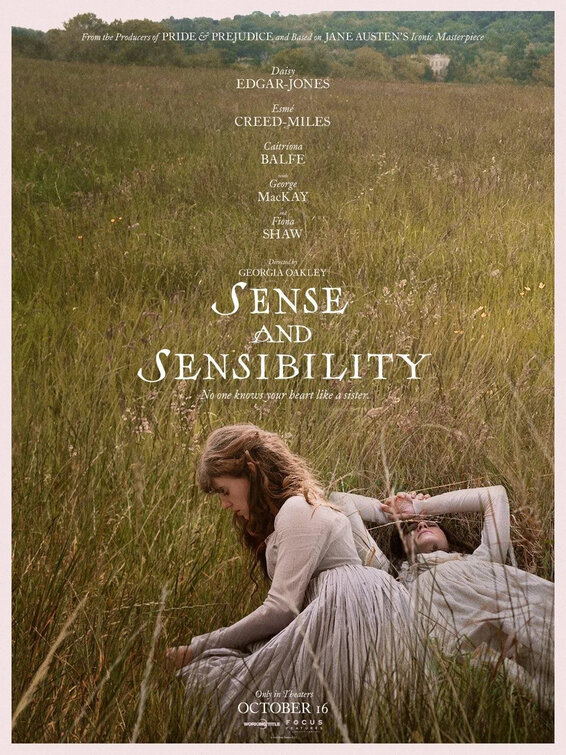
- Starring
- Daisy Edgar-Jones, Esmé Creed-Miles, Caitríona Balfe
- Written by
- Diana Reid (screenplay) and Jane Austen (based on the novel by )
- Directed by
- Georgia Oakley
- Run Time
- 2h 11min
- Release Date
- October 16th, 2026
Overall Score
Rating Summary
Some authors’ work seems destined to be adapted again and again. Shakespeare comes to mind, along with Edgar Allan Poe, Alexandre Dumas, and, for the romantics among us, Jane Austen. From Pride and Prejudice (Mr. Darcy and all), to Emma and Sense and Sensibility, filmmakers keep finding reasons to return to her stories. This time, director Georgia Oakley takes on Sense and Sensibility, bringing us back to a world of horse-drawn carriages, complicated courtships, and longing glances between Elinor Dashwood and Edward Ferrars.
Things aren’t looking good for the Dashwood women. Following Mr. Dashwood’s death, they face losing both their home and the comfortable life they’ve known. The eldest sister, Elinor (Daisy Edgar-Jones), appears to be handling the upheaval best, while Marianne (Esmé Creed-Miles) takes it much harder. Their youngest sister, Margaret (Bodhi Rae Breathnach), falls somewhere in between.
Their half brother, John Dashwood (Tom Brooke), has inherited the family estate, and his wife, Fanny (Stacy Martin), is eager to settle in while giving the Dashwood women as little as possible. The one bright spot in Fanny’s arrival is her brother, Edward Ferrars (George MacKay). As he and Elinor spend time together, their walks and conversations begin to suggest something more.
There’s also Mrs. Jennings (Fiona Shaw), who is determined to see the Dashwood sisters married off. A trip to London offers possibilities, but romance rarely goes according to plan, especially in an Austen story. Hearts are broken, expectations are tested, and finding a place to call home proves easier than finding a happy ending. Whether those happy endings arrive is part of the pleasure of watching.
Adapted by Diana Reid from Austen’s novel, this Sense and Sensibility treats pain and disappointment as unavoidable parts of life without losing faith in the possibility of love. Compared with the 1995 film, Oakley’s version feels a little less polished in the Hollywood sense and more grounded. That starts with its soft, earthy colors and costume choices, which help make this world feel lived in.
The film really comes alive in its group scenes, where personalities clash, feelings go unspoken, and the dynamics between characters have room to develop. There’s plenty to appreciate in the sets and costumes, but it’s watching these people navigate one another that makes Sense and Sensibility such an entertaining watch.
Oakley brings a fresh perspective to Austen’s story, exploring how wealth, gender, and the pressure to keep emotions in check shape the sisters’ lives. Those ideas come through in the characters’ choices and relationships, giving the romance weight beyond the question of who ends up with whom.
The cast is a major strength, with everyone seeming well suited to this version of the story. Creed-Miles and Shaw are the standouts for me, frequently stealing the scenes they’re in. Edgar-Jones and MacKay also work beautifully together, making Elinor and Edward’s connection feel worth rooting for. In a romance built partly around what people can’t bring themselves to say, that chemistry matters.
I’m not sure this Sense and Sensibility reaches the same heights as Ang Lee’s 1995 adaptation, but Oakley gives us plenty of reasons to revisit the story. Her take feels capable of introducing a new generation to Austen while offering longtime admirers something to enjoy. It’s a lovely fit for a fall movie night: thoughtful, romantic, and just the sort of film that might make you believe in love again.

Member of the North Texas Film Critics Association, and lover of all things Cinema
Brian Taylor
Member of the North Texas Film Critics Association, and lover of all things Cinema