Brian Taylor: All right, good morning. So, you told this story in six minutes first. What was the question the short [film] left that you felt only the feature could answer?
Yerkezhan Baizhan: Maybe how to move on, how to deal with grief. Because when I shot the short, I was younger than I am now, and I had a different vision. I have a different perspective to life and it was so important for me to emphasize the feelings I have now as I grew up.
Brian: The old age of 23 now. The short drew from your own memories. Was there a detail or idea that you felt you had to keep because it was still unresolved for you? Was there anything more you wanted to say when expanding from the short film into the feature?
Yerkezhan: It was for sure my grandma, she was the main inspiration. She has nothing in common with the character, the teacher. But, when I was stuck with my grandma’s dead body, it affected me deeply. I always think about it, and it’s terrifying, It’s horrifying. So, I just wanted to talk about it more, and I wanted to keep the characters from the short. I think that maybe my real life in the village was an inspiration, and I wanted to keep this setting for my feature. And, of course, the relationship between my family was the main inspiration.
Brian: The grandma’s house is supposed to feel safe, just like how a grandma’s house is supposed to feel. So, what was the first ordinary thing you changed to make the home feel frightening?
Yerkezhan: Maybe you noticed, maybe not but there are wallpapers in the living room that reference Psycho, it’s a little reference. I wanted to just make sure that it looks like this was our house because our grandparents are so connected to us, our culture, and it’s kind of scary. It’s not comfortable. All the pictures on the wall are watching you during the night. I experienced this becauseI lived with my grandma, and those pictures always scared me.
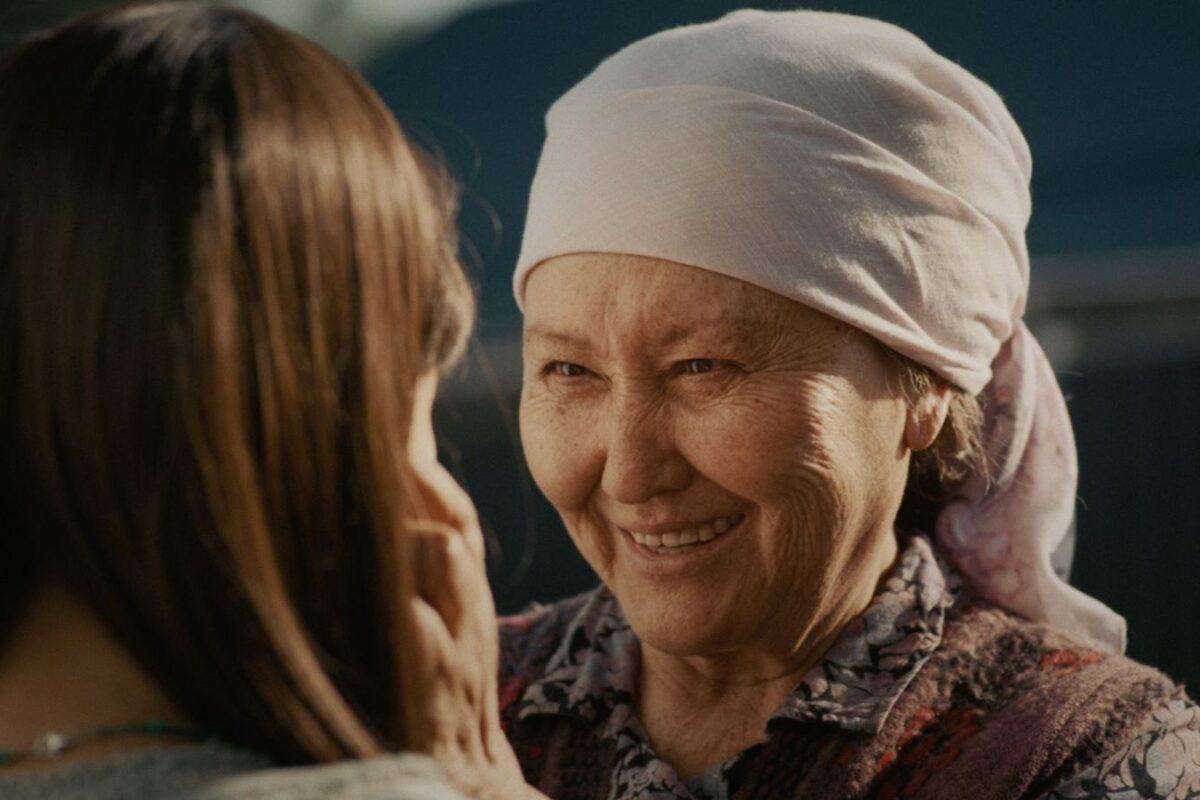
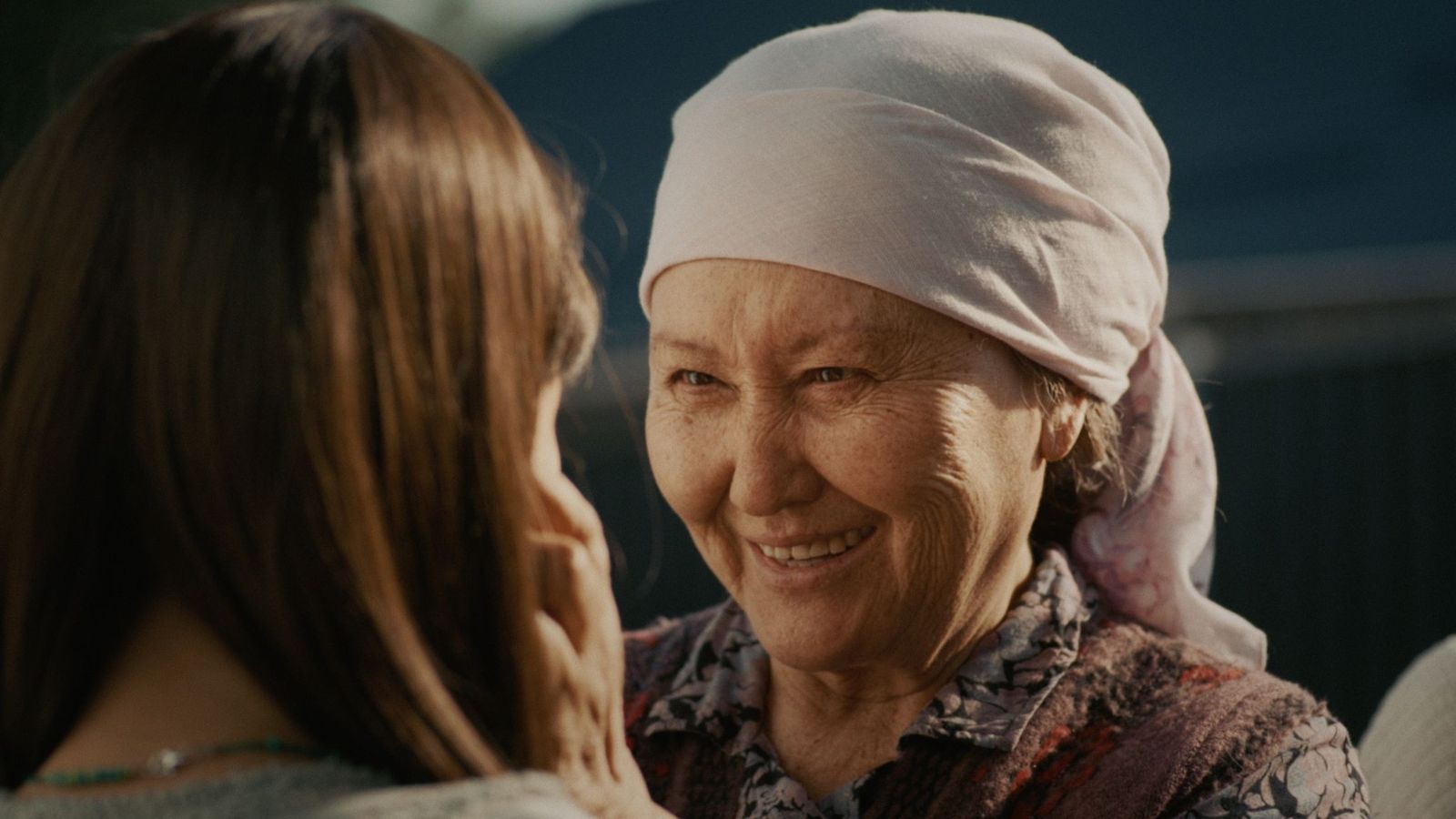
Brian: I remember growing up, having seen clothing hanging on like a door or something and thinking it was walking towards me in the dark because your eyes played tricks with you. How did you want Kalima [Azerke Kozaiyr] to see her grandmother; as someone to care for, or someone she could no longer understand?
Yerkezhan: I think that Grandma was the first person for Kamila to trust because we are very close to our grandparents and it was extremely important for me to emphasize this relationship between grandma and the granddaughter. I just wanted to make sure that Kalima relies on her grandma but it turns out that she can’t.
Brian:I remember in the beginning, it’s a safe spot because her parents are fighting. Then she gets there, and her grandmother is like, “Leave my baby alone.” You’ve set it up so that this is a safe space from the experience she’s having with her parents fighting all the time.
Yerkezhan: Exactly. I also wanted to explore that your closest person can hurt you and you never expect it. I think it’s horrifying.
Brian: I’m just curious, did any of this change while you were writing it versus when you first started it?
Yerkezhan: No, it changed. It changed a lot. But the main idea was in the foundation of my script.
Brian: What can horror express about aging and loss that a straightforward family drama might struggle to express?
Yerkezhan: I think horror is the best genre to talk about pain, to talk about our struggles. It’s not about aging, it’s all about our inner feelings. Because no matter how old you are, it’s so important to just move on, move on and live their life, because we’re here for a very short time, you know. It’s not about aging.
Brian: Fantastic Fest audience saw the short two years ago. So, what reaction from the feature are you most curious to hear from them?
Yerkezhan: I’m open to every reaction, but there’s one important one I want it to be is heard. I want the audience to understand what I was talking about, because it’s kind of therapy for me. It’s nothing like business or commercials. It was just a film with feelings, with truly honest and sincere feelings.
Brian: You did a good job with that. So, what does Ürei mean to you, beyond the literal translation? Has the meaning changed between the short and the feature?
Yerkezhan: Actually, it’s the same title, and it’s translated as “Dread” “Horror”. I wanted to keep it simple because it’s a horror. It’s not about a genre, it’s a horror where these kinds of things happen. So, I think that’s why I chose it. For example, in the short, it meant horror but in a smaller version but in the feature, it’s kind of like a huge thing.
Brian: All right. Last one here. What was the one decision on your first feature that made you think, “okay, I’m really directing a feature film.”?
Yerkezhan: Okay, I’m being honest with you. I didn’t want to direct my feature because I wasn’t sure I wasn’t confident about my directing skills. I think that I mess up with my short. [both laugh] But my producers, they were so supportive. They said, “no, you’re the only option. You understand the script. You’re the writer, so you have to direct it.” I was like, “okay.” I just had no choice, you know.
Brian: And it turned out great.
Yerkezhan: And now of course, I’m directing another film.
Member of the North Texas Film Critics Association, and lover of all things Cinema
Brian Taylor
Member of the North Texas Film Critics Association, and lover of all things Cinema